

Let’s be honest. The hybrid work model is here to stay, but it’s not without its… well, its weirdness. You’ve got half the team buzzing in the office, the other half on mute from their living rooms, and this constant, low-grade anxiety about whether you’re really in the loop. Are people speaking up? Or are they just smiling politely on camera, holding back their best ideas?
The core challenge, the one that makes or breaks hybrid success, isn’t just about tech or schedules. It’s about something softer, yet infinitely more powerful: building psychological safety and trust when your team is physically fragmented. When people don’t feel safe to take risks, voice concerns, or admit mistakes without fear of embarrassment or punishment, innovation dies. Quietly. On a Google Meet near you.
Why Hybrid Work Makes Trust So Fragile
In a traditional office, trust and safety were built, often unconsciously, through a thousand tiny interactions. The quick chat by the coffee machine, the body language you catch after a meeting, the simple act of walking over to someone’s desk. Hybrid work strips most of that away. What’s left is often purely transactional—and that’s a problem.
We’re dealing with what I call “proximity bias,” a real pain point for remote employees. It’s the unconscious tendency to favor those we see regularly in the office. The “out of sight, out of mind” trap. This erodes trust faster than a bad Wi-Fi connection. Remote team members start to wonder: “Are my contributions being noticed? Is that promotion going to the person who has lunch with the boss?”
And without the natural rhythm of shared space, misunderstandings multiply. A delayed email response gets interpreted as disinterest. A missing emoji in a chat feels like coldness. We lose the context, and our brains, being what they are, often fill the void with a negative story.
The Four Pillars of Hybrid Psychological Safety
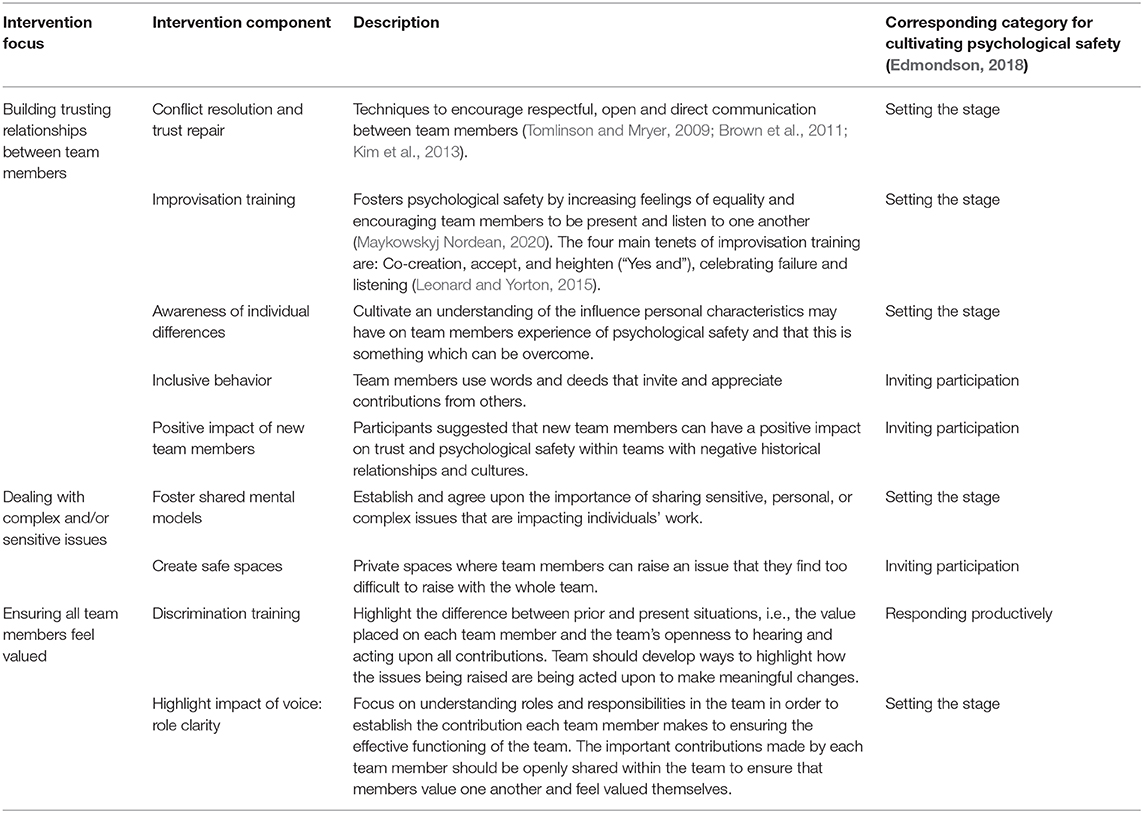
Amy Edmondson’s framework for psychological safety is the gold standard, but applying it in a hybrid context needs some translation. Here’s how to make it work.
1. Cultivating a Climate of “Messy Middle” Communication
This is about making it safe to express the in-between thoughts. Not the polished final report, but the “I’m stuck” or the “This might be a dumb idea, but…” Leaders have to go first here. Model vulnerability. In a team sync, you could say, “I fumbled that client call yesterday—here’s what I learned.” That gives everyone permission to be human.
Create dedicated, low-stakes channels for this. A “#wins-and-fumbles” Slack channel. A five-minute “what’s blocking you?” round-robin at the start of virtual meetings. The goal is to normalize the learning process, not just the end result.
2. Framing Work as a Learning Problem, Not an Execution Problem
When a project is presented as a pure execution task, mistakes become failures. Frame it instead as a learning journey. Say things like, “We’re exploring this new market, so our goal is to learn as much as we can this quarter, even from what doesn’t work.” This subtle shift reduces the fear of being wrong—a major barrier to speaking up, especially for remote folks who might feel they have to be perfect to be seen.
3. Proactive, Intentional Inclusion
In a hybrid meeting, the playing field is not level. The people in the conference room have a natural advantage. You have to actively engineer inclusion. Assign a meeting facilitator whose sole job is to call on remote participants first. Use a single, shared digital whiteboard (like Miro or FigJam) so everyone is literally looking at the same canvas, regardless of location.
And this is crucial: make all meetings “hybrid-first.” That means if one person is remote, everyone joins from their own laptop, even if they’re in the office. It equalizes the experience instantly.
4. Responding Productively (Every. Single. Time.)
Trust is built in moments of micro-risk. When someone does speak up with a concern or a half-baked idea, your reaction is everything. A dismissive “We’ll circle back on that” or a non-answer can shut down psychological safety for months. Instead, practice appreciative responses: “Thank you for flagging that risk—it’s something we definitely need to mitigate,” or “I love the direction of that idea. What if we built on it by…”
Practical Tactics to Weave Into Your Workweek
Okay, so the pillars are the philosophy. Here’s the practical stuff, the tactics you can start next week.
| Tactic | For In-Person Teams | For Virtual/Async Teams |
| Check-Ins | Start meetings with a personal & professional “temperature check.” | Use a start-of-week Slack thread or a Loom video update sharing priorities and a personal win. |
| Feedback Loops | Implement “stop, start, continue” retrospectives after projects. | Use anonymous pulse surveys (like in Officevibe or Culture Amp) with specific questions on safety. |
| Social Capital | Create random “coffee roulette” pairings for informal chats. | Host virtual “co-working” sessions with casual breakout rooms, or dedicated non-work Discord channels. |
| Clarity & Context | Document decisions visibly on a team wiki or board. | Record key decision-making meetings and share summaries, ensuring remote members have equal access to the “why.” |
Another powerful, simple idea? The “Virtual Open Door.” Leaders should block explicit, advertised “office hours” on their calendar specifically for remote team members to drop in with anything—no agenda needed. It signals availability in a way that feels more concrete than an always-on Slack status.
The Leader’s Role: It Starts (and Stops) With You
Look, building psychological safety in a distributed team isn’t something you delegate. It’s the core of your job now. Your behavior is the loudest signal. You must:
- Demonstrate vulnerability consistently. Admit what you don’t know.
- Curiosity over judgment. Ask “What led you to that conclusion?” instead of “Why did you do that?”
- Explicitly reward the behavior you want to see. Publicly thank people for asking tough questions or spotting problems early, even—especially—if it came from a remote employee.
- Audit for proximity bias. Regularly review who gets high-visibility projects, recognition, and mentorship. Is it evenly distributed?
Honestly, it’s tiring work. It requires a level of intentionality that feels almost unnatural at first. But that’s the point. The casual, accidental trust of the old office is gone. We have to build a new kind—one that’s deliberate, resilient, and designed for distance.
The Ultimate Payoff: A Team That Actually Thinks Together
When you get this right, the hybrid model stops being a compromise. It transforms. You’re no longer managing a split team; you’re leading a unified brain trust that happens to occupy different spaces. The ideas get better, because they’re drawn from more diverse perspectives, safely shared. The risks are caught earlier, because people aren’t afraid to sound the alarm. The commitment deepens, because people feel seen and valued for their minds, not their location.
That’s the goal, isn’t it? Not just to make hybrid work tolerable, but to make it thrive. To create an environment where the best idea wins, no matter whose Zoom tile it comes from. It starts with a simple, courageous choice: to prioritize psychological safety and trust not as a soft skill, but as the essential infrastructure for everything you want to build next.