

Let’s be honest. The old playbook for building resilient teams—the one about weathering the storm and bouncing back—feels a bit outdated now, doesn’t it? In today’s world, storms aren’t just passing through; they’re the new climate. Constant market shifts, technological upheavals, and just plain unexpected chaos are the norm.
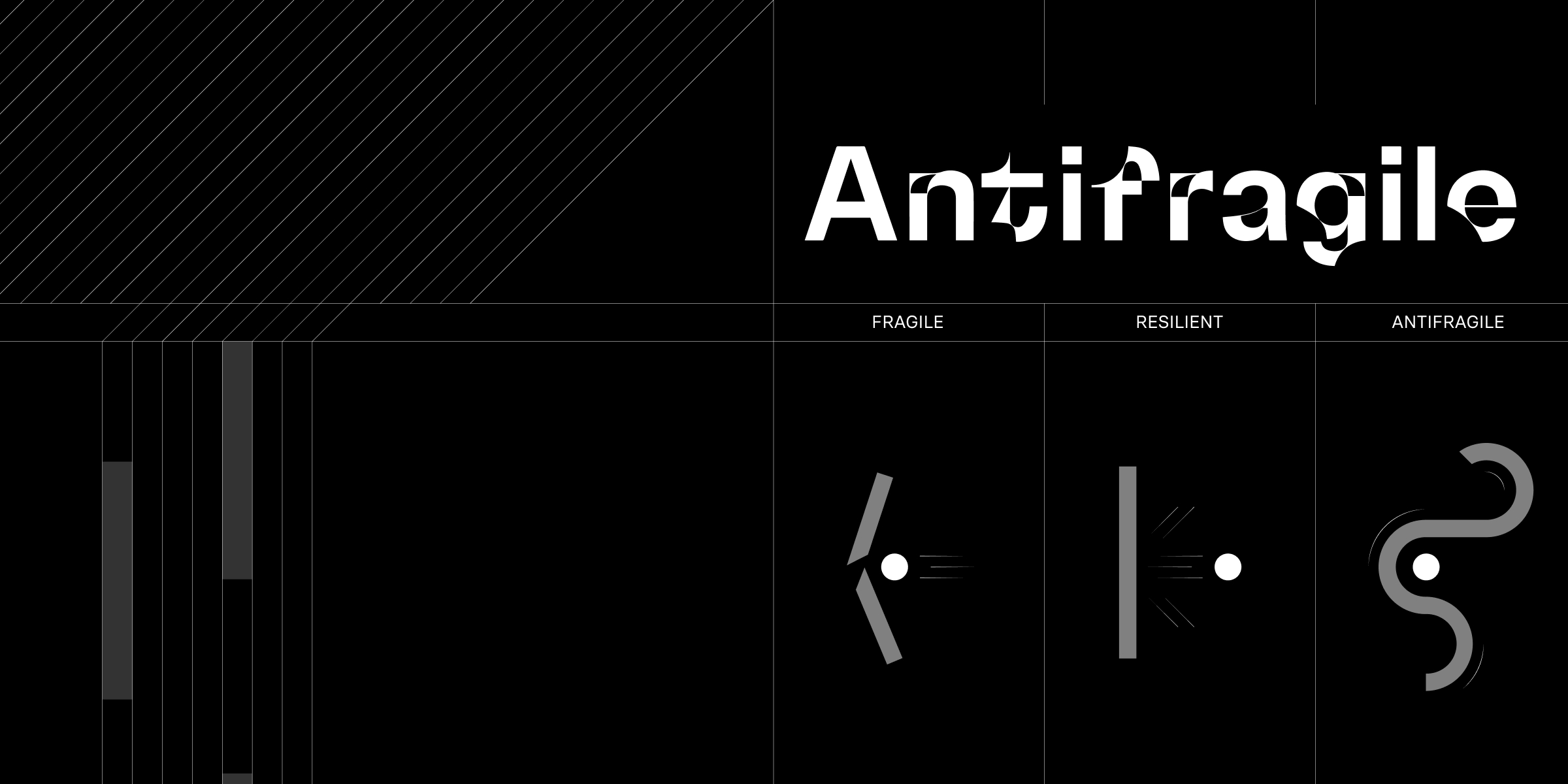
That’s why the smartest leaders aren’t just building teams that survive stress. They’re cultivating something more powerful: antifragile teams. It’s a concept from thinker Nassim Taleb. If something fragile breaks under stress, and something resilient withstands it, then something antifragile actually gets stronger because of it. Think of your bones. They get denser under load. Or a forest fire that clears out underbrush, allowing for healthier, more robust new growth.
An antifragile team doesn’t just endure volatility; it uses it as fuel. It learns, adapts, and emerges from chaos more capable than before. Here’s the deal: building this isn’t about finding superheroes. It’s about designing a system, a culture, that turns pressure into a catalyst.
Beyond Resilience: The Antifragile Mindset Shift
First, we need to move past resilience. A resilient team is like a rubber band—it stretches under pressure and snaps back to its original shape. That’s good! But it hasn’t fundamentally changed. An antifragile team is more like a muscle. Stressed correctly, it develops micro-tears and then repairs itself to become stronger. The original shape is gone; a new, more capable one has taken its place.
This requires a foundational mindset shift, from leadership on down. The goal isn’t to create a perfectly smooth, predictable environment. Honestly, that’s a fantasy. The goal is to create a team that sees disorder as information. Every setback, every surprise customer complaint, every failed project sprint isn’t a mark of failure—it’s critical data. It’s the system telling you where your weaknesses are, where your assumptions were wrong.
The Three Core Pillars of Antifragility
You can’t just tell a team to “be antifragile.” You build it on three core pillars. Think of them as the essential nutrients for that organizational muscle growth.
- Optionality & Decentralized Control: This is about having more than one way to win. A fragile system has a single point of failure—one supply chain, one decision-maker, one rigid process. An antifragile team has options. It empowers people closest to the problem to make calls. It runs small, safe-to-fail experiments constantly. When a big shock hits, the team has multiple levers to pull and the autonomy to pull them fast.
- The Redundancy of Skills, Not Just Roles: We often see redundancy as waste. In antifragility, it’s a strategic buffer. This isn’t about hiring duplicates. It’s about cross-training and building what military units call “shared consciousness.” Can your designer handle basic UX research if needed? Does your backend engineer understand the customer support pain points? This creates a network that can reroute around damage.
- A Non-Punitive Culture of Intelligent Risk: This is the big one. If people are punished for small, honest failures, you kill antifragility in its crib. Teams will hide mistakes, avoid experiments, and wait for orders. An antifragile culture celebrates intelligent risk-taking and treats the resulting lessons—good or bad—as pure gold. The post-mortem isn’t a blame session; it’s a “pre-mortem” for the next challenge.
Practical Tactics for Building Your Antifragile System
Okay, so mindset is key. But what does this look like on a Tuesday afternoon? Here are some concrete, actionable strategies to start weaving antifragility into your team’s DNA.
1. Run “Stress Tests” on Purpose
Don’t wait for a crisis to reveal your weak spots. Simulate them. This is like fire drills for your team’s processes. What happens if your lead developer is out sick during a critical launch? What if a key vendor drops you? Run a quarterly “disaster day” where you role-play these scenarios. The stress is controlled, but the learning is real. You’ll uncover process gaps and communication bottlenecks before they cost you for real.
2. Implement a “Lessons Learned” Log (Not a Blame Log)
Create a living document—a wiki, a shared board—that is the single source of truth for mistakes and their fixes. The rule? The entry must focus on the systemic cause, not the person. “The deployment failed because the manual handoff step was unclear and there was no rollback checklist” is good. “John messed up the deployment” is forbidden. This log becomes your team’s immune system memory, helping it recognize and fight familiar threats faster.
3. Design for Flexibility, Not Efficiency (Alone)
Modern management has been obsessed with lean, hyper-efficient systems. But efficiency often removes slack—and slack is the space needed for adaptation. You need some buffer. Maybe it’s a 20% “exploration time” for engineers. Maybe it’s a budget for quick, off-roadmap experiments. The most efficient machine breaks under unexpected load. The robust system has a little give, a little spare capacity to reallocate when the world changes.
| Fragile Team Trait | Antifragile Team Alternative |
| Centralized decision-making | Clear guardrails with decentralized execution |
| Hiding small failures | Broadcasting & analyzing small failures |
| Specialized, siloed skills | T-shaped skills with broad cross-training |
| Goal: Avoid all volatility | Goal: Learn and adapt from volatility |
| Post-mortem to assign blame | Post-mortem to update systems & checklists |
The Leader’s Role: Gardener, Not Architect
This shift changes leadership fundamentally. You’re not an architect designing a rigid, perfect structure. You’re a gardener. You can’t control the weather (volatility), but you can prepare the soil (culture), plant diverse seeds (optionality), prune wisely (intelligent risk), and create an ecosystem where strong, adaptable growth is inevitable.
Your job is to set the boundaries of the garden and then get out of the way. Provide the nutrients—psychological safety, resources, trust—and then let the team figure out how to grow towards the sun. Your most powerful tool becomes asking questions, not giving answers. “What did we learn?” “What small experiment can we run to test that?” “How can we turn this problem into a chance to improve a process?”
It feels counterintuitive. In chaos, our instinct is to clamp down, take control, dictate solutions. But that just centralizes fragility. The antifragile leader distributes the capacity to respond.
Embracing the Discomfort
Cultivating antifragile teams isn’t a comfortable, linear process. It’s messy. It means celebrating a well-run experiment that “failed.” It means watching a team struggle through a simulated crisis without jumping in to save them. It requires a deep trust that the system you’ve built—the culture of optionality, learning, and distributed control—will produce a better outcome than your direct command ever could.
In the end, you’re not building a team for a specific, known future. You’re building one that can engage with an unknown, volatile future and be improved by it. That’s the real payoff. When the next big disruption hits—and it will—you won’t see a team hunkering down, hoping to survive intact. You’ll see a team leaning in, energized, already asking: “What can this teach us, and how can we come out stronger?”
That’s not just resilience. That’s a competitive superpower.