

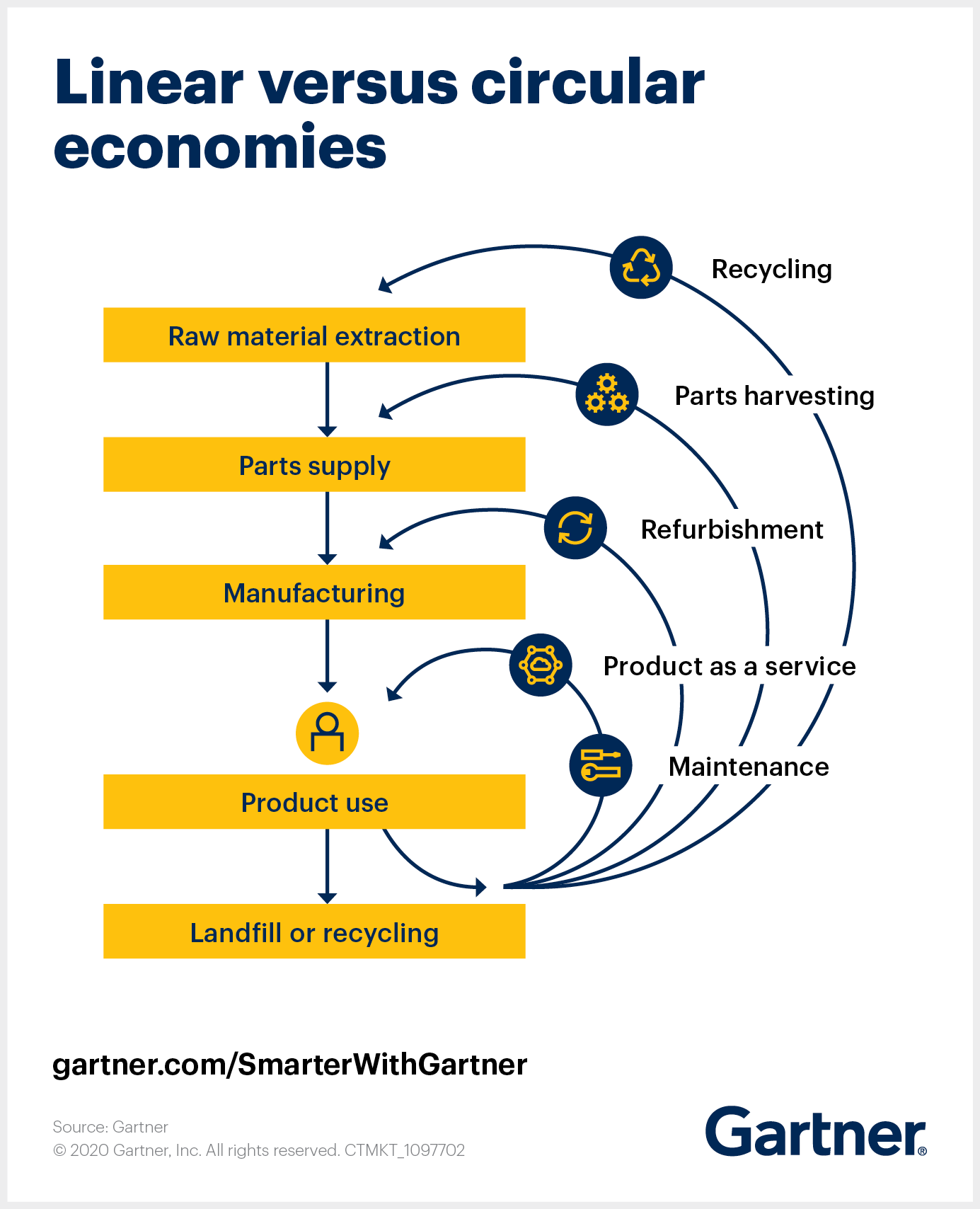
Let’s be honest. The old way of doing business—take, make, waste—isn’t just straining the planet. It’s starting to strain the bottom line, too. Raw material costs are volatile. Customers are demanding better. And honestly, the idea of endless growth on a finite planet is, well, a bit of a logical dead end.
That’s where the circular economy comes in. It’s not just recycling. Think of it as a complete redesign. A shift from a linear sprint to a marathon run on a track that loops back on itself. Your waste becomes your feedstock. Your product’s end-of-life is just its next beginning.
Building a circular business model from scratch might seem daunting. But here’s the deal: starting fresh gives you a massive advantage. You’re not untangling decades of linear processes. You’re designing the loop from day one. Let’s dive in.
Laying the Foundation: The Core Circular Principles
Before you sketch your first business plan, you need to internalize three core principles. These aren’t just buzzwords; they’re your new operating system.
1. Design Out Waste and Pollution
This starts at the drawing board. It means asking: Can this be made with fewer materials? Can we use only non-toxic, easily separable components? It’s about viewing waste as a design flaw, not an inevitable byproduct. Imagine designing a shoe where the sole, laces, and fabric can be easily disassembled and returned to their respective material streams. That’s the mindset.
2. Keep Products and Materials in Use
This is the heart of the loop. It pushes you beyond selling a product to managing an asset. How long can it last? Can it be repaired, refurbished, or remanufactured? Can its components be harvested for a new life? The goal is to maximize the utility—and the value—of every single material, for as long as humanly possible.
3. Regenerate Natural Systems
This one goes a step further. It’s not just about doing less harm, but about actively doing good. Can your business model support regenerative agriculture for your raw materials? Can you use biodegradable packaging that enriches soil? It’s about leaving the environment better than you found it.
Your Blueprint: Five Steps to Build the Loop
Okay, principles are clear. Now, how do you translate them into a viable business? Here’s a practical, step-by-step blueprint.
Step 1: Rethink Your Value Proposition
Forget “selling a product.” What are you really selling? Access? A service? An outcome? This shift is crucial. Some of the most successful circular economy business models are built on:
- Product-as-a-Service: You sell lighting as a service, not lightbulbs. The customer pays for lumens, you own the fixtures and are incentivized to make them long-lasting, repairable, and ultra-efficient.
- Sharing Platforms: Think tool libraries or peer-to-peer fashion rental. Maximizing the use of idle assets.
- Performance-Based Models: Selling “clean clothes” instead of detergent, where you provide the product in concentrated, returnable packaging.
Step 2: Design for Circularity (It’s in the DNA)
This is where you bake the loop into your product. Key strategies include:
- Modular Design: Create products with interchangeable parts. A phone with a replaceable battery. A sofa with swappable covers. This makes repair and upgrade a breeze.
- Material Choice: Prioritize recycled, recyclable, or rapidly renewable materials. Avoid toxic adhesives and complex material mixes that are a nightmare to separate.
- Durability & Repairability: Build things to last. And then make sure they can be fixed. Offer repair guides, sell spare parts. Make durability a key marketing point.
Step 3: Build Your Reverse Logistics Engine
This is the unsexy, but absolutely critical, backbone. How do you get your product back? If you can’t recover it, the loop breaks. You need a system that’s as smooth as your outbound delivery. Options include:
| Model | How It Works | Customer Incentive |
| Take-Back Programs | Pre-paid return labels, in-store drop-off. | Discount on next purchase, loyalty points. |
| Deposit Schemes | Customer pays a small deposit refunded upon return. | Direct financial return. |
| Pick-Up Services | Scheduled collection for larger items (furniture, appliances). | Convenience, responsible disposal. |
Step 4: Choose Your Circular Pathway
Once you have the product back, what’s next? This is your value-recovery moment.
- Refurbish & Resell: Clean, repair, and update. Common in electronics and furniture.
- Remanufacture: Disassemble to component level, restore to like-new condition, often with a new warranty. This is big in automotive and industrial parts.
- Harvest & Recycle: For products at true end-of-life, disassemble and recover materials (metals, plastics, fibers) to feed back into your own supply chain or sell.
Step 5: Validate & Communicate the Value
You can’t build this on green sentiment alone. Crunch the numbers. Where are the cost savings? In cheaper raw materials? Reduced waste disposal fees? New revenue streams from refurbished goods? Build a solid financial case.
Then, tell that story. Not with vague eco-claims, but with transparency. Share the lifecycle of your product. Be honest about the challenges. This builds immense trust and turns customers into active participants in your loop.
The Real-World Hurdles (And How to Jump Them)
It’s not all smooth sailing. Starting a circular business means navigating some unique challenges. The supply chain for recycled materials can be… messy. Consumer habits are hard to change. And upfront costs for durable design can be higher.
The trick is to start small. Pilot a take-back program with your most dedicated customers. Launch a single product line with circular design. Partner with an existing refurbishment specialist instead of building your own facility right away. Iterate, learn, and scale.
In fact, that iterative, learn-as-you-go approach is deeply human. It’s how the best businesses—circular or not—are built.
Closing the Loop: A New Business Compass
Building a circular economy business model from the ground up is more than a sustainability play. It’s a profound shift in perspective. You stop seeing your customer as an endpoint and start seeing them as a partner in a continuous cycle. You stop viewing materials as stuff to be consumed and start viewing them as valuable assets to be stewarded.
It builds resilience. It fosters innovation in ways a linear model simply can’t. And it aligns your success with the long-term health of the systems we all depend on. That’s not just good ethics; it’s starting to look like the very definition of good business sense.
The loop is waiting to be closed. And the blueprint, well, it’s right here.